
Why is freight forwarding a strong use case for AI?
Freight forwarding combines repetitive communication, document-heavy workflows, and structured operational patterns, which are ideal conditions for AI automation.
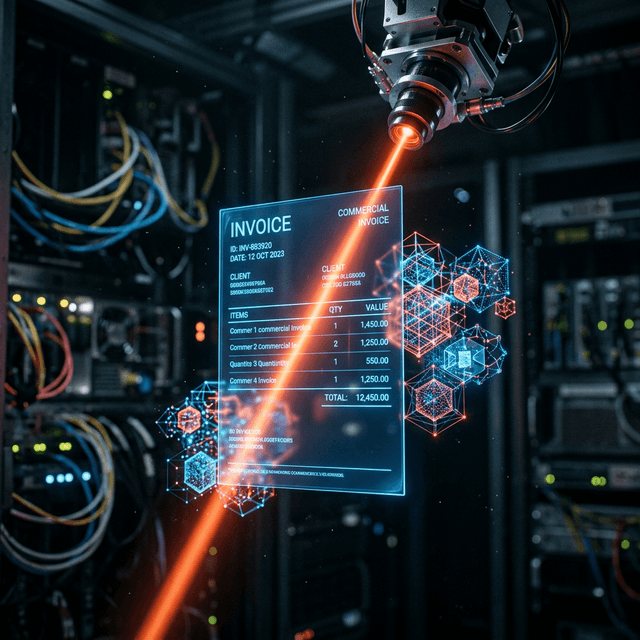

Freight forwarding is fundamentally a relationship and sales business. A forwarder’s true value lies in securing capacity, offering strategic pricing, expanding trade lanes, and solving complex supply chain exceptions for their clients.
Forwarders should spend their time winning new business and deepening shipper relationships.
But instead, they are trapped.
If you walk into a typical operations floor today, you won't see teams strategizing over new trade routes. You will see highly skilled people copying data from an email into a TMS, downloading PDF shipment documents, and typing out status updates to customers.
The industry is buried under an invisible operational tax. However, the exact structural problems that make freight operations so painful—standardized documents, email-intensive workflows, and disconnected systems—are exactly what make freight forwarding the perfect environment for AI.
To understand why AI is the answer, you first have to look at how freight operations actually work today.
Let's look at the current workflow for an average spot quote or booking:
For every single shipment, an operator has to touch multiple systems, stitch context together, and manually translate unstructured data (emails) into structured data (TMS entries).
The majority of an operator's day is consumed by these repetitive tasks. They act as human routers—reading an email from a customer, checking a portal, and typing the answer back into another email.
Because everything is manual, freight forwarding has historically operated on a rigid, labour-indexed business model.
When a standard freight brokerage or forwarder wants to grow, they inevitably hit an operational ceiling. You cannot double your shipment volume without proportionally increasing your operations headcount.
Endless Emails
PDF Documents
Manual Data Entry
All Bottlenecking At The Operations Team
This creates a structural scaling problem. Operations labour often represents the largest cost line on the P&L. As the company scales, margins inevitably shrink under the weight of the required coordination and manual work. Growth becomes painful rather than profitable.
Further compounding this labour dependency is the software landscape. Freight teams do not lack software; they suffer from too much disconnected software.
A modern forwarder is simultaneously managing:
None of these systems talk to each other intelligently. They act as passive databases. They store information, but they do nothing to actively move the workflow forward or help operators decide what should happen next. The human is the API connecting all these tools together.
When you look at these problems from a technology perspective, they aren't actually problems—they are the perfect prerequisites for autonomous AI agents.
AI excels exactly where human operators struggle: reading massive amounts of unstructured text (emails), parsing complex standard formats (commercial invoices, packing lists), querying multiple databases instantly, and routing communications to the right stakeholders.
Navix AI Logic Engine
Instant Automated Action
Instead of ripping and replacing the TMS, AI sits on top of the existing fragmented stack. It unites the passive databases into an active, intelligent workflow.
AI correctly identifies a quoting request, reads the attached dimensions, pings the rate sheets, checks live sailing schedules, drafts the reply, and stages it for human approval—in seconds instead of hours.
This fundamentally breaks the headcount-to-growth ratio. For the first time in the history of the industry, forwarders can 10x their shipment volume without needing to 10x their operational staff.
The future of freight forwarding is human-AI partnership.
We are not replacing the forwarder; we are promoting them. When we strip away the robotic data entry, humans can finally focus on what they are hired to do.
What Humans Do
What AI Does
In this model, AI handles the standard operational coordination, processing documents and staging workflow actions, while human operators act as pilots—handling exceptions, verifying decisions, and managing strategy.
At Navix, our goal is not simply to build a faster quoting tool or a better OCR scraper. We are building the operational infrastructure that allows freight businesses to scale infinitely.
When you look closely at freight forwarding, it has every single ingredient necessary for massive AI transformation: heavy reliance on standardized documents, highly email-centric workflows, highly fragmented legacy systems, and a deeply painful reliance on manual operational labour.
The industry is built for AI. The forwarders who recognize this and deploy agentic intelligence over their operations will operate at margins and speeds their traditional competitors simply cannot match.
Freight forwarding combines repetitive communication, document-heavy workflows, and structured operational patterns, which are ideal conditions for AI automation.
Yes. AI helps teams scale shipment and quote volume without linear staffing growth by automating routine coordination tasks.
Last updated: April 2026 | v1.0